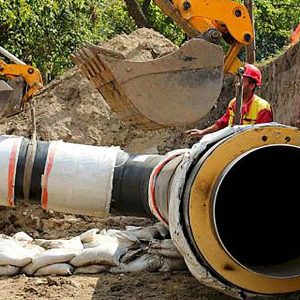
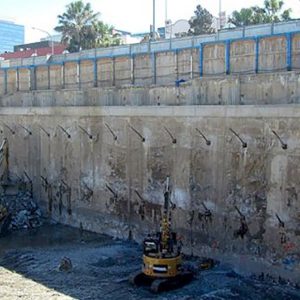
Trench stability studies are often done on-site, which saves time and prevents delays in construction. On-site, skilled engineers do these inspections to spot possible stability problems and assess the need for benching, battering, or support systems. We consider all of the many aspects that might lead to an unstable excavation. If necessary, we can also provide advice on how to minimize any possible consequences on nearby structures as well as appropriate or alternative excavation techniques.
Bearing Capacity Assessments
We are aware of the high cost of building delays and are able to supply skilled engineers around-the-clock, on-site. Allowable Bearing Pressure Reports offer crucial data for verifying specification design parameters or for structural design. The ground’s bearing capacity refers to its ability to withstand loads exerted by a construction. This data is used to determine the material’s minimum necessary permitted bearing capacity in structural footing design. The calculation of the permissible bearing capacity involves dividing the final bearing capacity by a safety factor.
Foundation Inspections
Inspections of footings or foundations are often carried out to verify that the real subsurface conditions during construction comply with the specifications of the design specifications. Costs associated with building delays might be quite high. We are aware of this and have skilled engineers on hand to offer prompt onsite verification or, if necessary, remedial advice and suggestions in order to keep your project going ahead.
The ground’s ability to sustain loads imposed from a structure is known as its bearing capacity. This data serves as the minimum necessary permissible bearing capacity of the material in structural footing design. The ultimate bearing capacity is divided by a safety factor to determine the permissible bearing capacity.
Pile / Crane Assessment
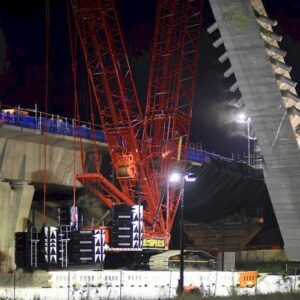
Even if an engineering platform is not necessary for your lift footprint or piling platform, you will still need a bearing capacity report or an engineer’s inspection. Even within the same work area, ground conditions might differ significantly from one business or site to another. This examination can be included in a risk assessment to guarantee sufficient crane support and serves as confirmation of the stated ground conditions. We provide you with the appropriate knowledge so you can decide wisely.
Pile Integrity Testing
A quick, easy, and inexpensive way to assess if a built pile is sound is to do low strain pile integrity testing. In order to test the pile, an accelerometer is fastened to its head and a compression wave is driven through it using a hammer. The reflected wave provides the accelerometer with data, which is then analyzed to identify any possible piling flaws.
With the tests, one can determine:
• Cracks or cavities in concrete that are significant • Approximate pile length (based on the kind of socket) • Concrete consistency (e.g., soil inclusions, concrete segregation)
Pile / Pier Inspections
When building bored piles, it is frequently necessary to have a geotechnical engineer on site to confirm that the ground conditions are as expected by the design.
When building the pile, the geotechnical engineer will make sure the following requirements are met:
• Pile base/shaft cleanliness; • Pile socket material and length; On the spot, a geotechnical report is finished and promptly distributed. If there are deviations from the initial plans, the engineer will help by offering guidance on the spot or collaborate with the designer to come up with a solution that will let the project move forward.
Plate Load Testing
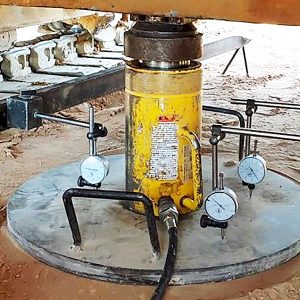
Although the majority of project site assessments take into account the ground conditions at deep, the strength and variability of the near-surface ground are crucial for the economical design of both rigid and flexible pavements. By using a mathematical connection, approximate comparable CBR values may be obtained from the modulus of subgrade response. Using a hydraulic jack to provide pressure, a steel bearing plate is loaded onto the subgrade surface to be measured as part of the test. The modulus of subgrade response is calculated by reading the resultant surface deflection from dial micrometres close to the plate edge.
Earthworks Inspections
In compliance with TfNSW / RMS R44 Earthworks Specifications, Ground Consult’s geotechnical engineers and engineering geologists have extensive experience performing earthworks inspections. They can offer advice on subgrade inspections, foundation treatments, test rolls, and strip inspections for commercial and infrastructure projects. We have the expertise to evaluate the needs of your site and choose the best course of action, including excavating and replacing, rip and recompact, bridging or drainage layers, geofabric reinforcement, and lime stabilization.